
MyHiringOptions state guide: Texas
Hiring in Texas: new-hire reporting, and keeping hires on schedule
If you hire in Texas, every new hire and rehire starts a short clock. This guide covers what the state asks for, who it covers, and how to keep the report from slipping through the gap between hiring and payroll.
The rule in Texas
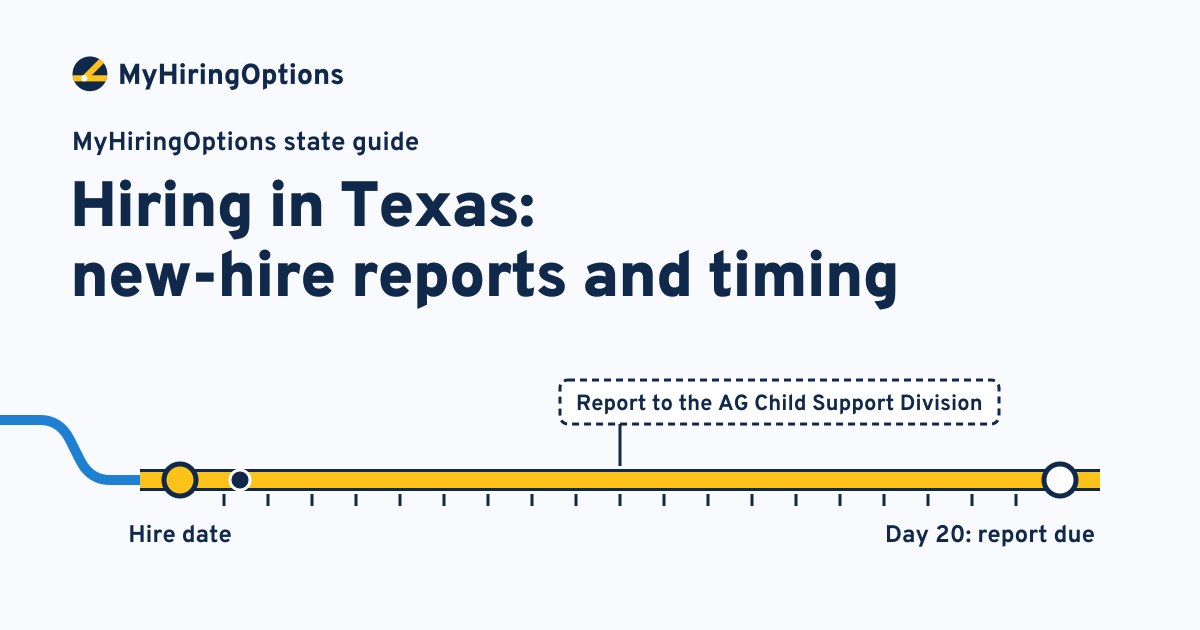
The Texas Workforce Commission states that employers must report new hires and rehires within 20 calendar days of the hire date. Reports go to the Child Support Division of the Office of the Attorney General, not to TWC. If you report electronically, TWC notes you report every 12 to 16 days.
Federal law sets the outer limit: an employer must report each new hire to the state directory of new hires no later than 20 days after the hire, and employers that report electronically may instead send two transmissions a month, 12 to 16 days apart. The report carries the employee's name, address and Social Security number, the date they first worked for pay, and the employer's name, address and federal tax identification number (42 U.S.C. 653a).
Who you report
TWC's guidance is broad: report all newly hired or rehired employees who live or work in any state. Its rule of thumb is simple: if the person has to complete a W-4, you report the hire. That includes part-time and seasonal staff, which matters for employers who hire cooks, drivers and front desk staff in waves.
Not the same as your quarterly wage report
TWC is explicit that new-hire reporting is separate from reporting quarterly wages to the Texas Workforce Commission. Filing wages on time does not cover the new-hire report, and the two go to different agencies. Keep them as two separate steps in your onboarding checklist.
Where it slips, and how to keep it on track
New-hire reports rarely go missing because anyone decided to skip them. They go missing at the hand-off: the hiring manager knows the start date, the office files the report, and nobody tells the office. Busy seasons make it worse, because ten starts in a week look like one.
The report itself is filed by whoever runs your payroll or onboarding. Where a hiring workflow helps is the hand-off: when your team marks a candidate as hired, the workflow can remind the person who files the report, with the hire date and the deadline, so the 20 days are not lost between the hiring manager and the office. Your team still decides who is hired and files the report.
Before you rely on this guide
Rules and portals change. Check the Texas Workforce Commission's new-hire reporting page for the current filing options before your next hire, and ask your payroll provider whether they already file the report for you.